Rotary Pilot (Multi) Handbook - UNITAF Force Manual (FM)


Rotary Pilot (Multi) Handbook
The FM outlines our core skills, policies and guides to ensure every member stands ready for the mission ahead.


Rotary Pilot (Multi)

Rotary Pilot (Multi)

in Rotary Aircrew Air Operations
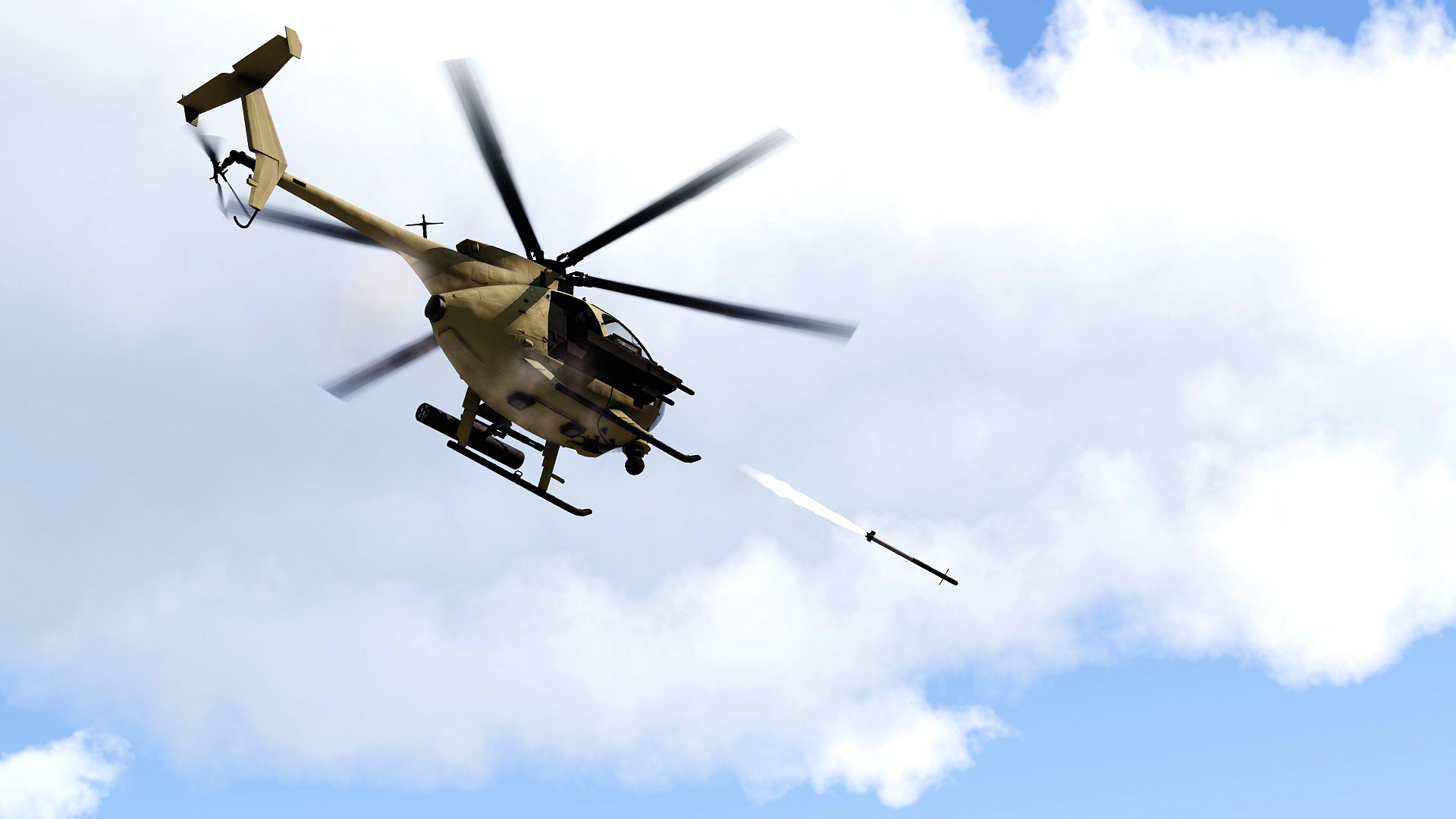
Rotary pilots in a multi-role platform perform general utility, airlift, transport and observation taskings but specifically in aircraft which are loaded to perform a combat role using unguided munitions. Typical examples are UH-60 Blackhawk or UH-1Y Venom armed with Hydra FFARs.
Filters
Estimated Role Data
The role card is not currently ready for full deployment so it is using a simplified version of the role card. The SOP from the legacy SOP portal has been transferred to guide blocks, but the Role Card itself may have only a handful of temporary skill blocks. The purpose of these skill blocks is to closely mimic LTS requirements to provide continuity of role access, and these role cards can be easily built on soon after launch to improve the accuracy while still benefitting from all the other features of FTS3 and the FM. Use this information as a general reference while understanding it may not reflect the final, role-specific requirements.

FM/G268 - Rotary Aircrew Experience

FM/BG-1236 - Temporary Experience Requirements Explained

Your role access is determined by your skills, experience with those skills, and the specific roles that utilize them. With over 100 roles in UNITAF, creating detailed skill breakdowns for every role is a substantial undertaking that cannot be completed overnight. 

Estimated Role Cards

To ensure the entire unit can transition to the new system immediately, some roles are tagged as **"Estimated"**. These roles use a transitional approach:

  • Temporary skill blocks simulate role-specific experience
  • Estimated access levels are calculated based on these placeholder blocks
  • Similar to LTS functionality but with improved accuracy and fewer limitations

Current State: Estimated roles provide functional access levels that closely mirror the previous LTS system while addressing many of its shortcomings. As development progresses, estimated role cards will be upgraded to the full FTS3 standard with detailed, role-specific skill requirements.

Important Note: When roles transition from "Estimated" to "Verified" status, your access level may change (either increase or decrease) as the requirements become more precise and role-specific.

This approach allows UNITAF to:

  • Maintain operations during the transition period
  • Provide immediate access to the improved FTS3 system
  • Ensure continuity while detailed role cards are developed
  • Gradually improve role accuracy over time

The estimated system serves as a bridge, ensuring no disruption to unit operations while we build toward the comprehensive FTS3 vision.

FM/BS-1237 - Experience as Rotary Aircrew

This is a temporary skill block, the skill block is being used to accumulate SP for time spent as Rotary Aircrew until it's role card is completed.

FM/G213 - Anti-air threat classification

FM/BG-962 - Small arms fire

Small arms can penetrate unarmoured cockpits at close range but are less effective beyond 500 meters. Indicators include muzzle flashes, tracers, and sounds of hits. React by performing break turns, jinking, and changing altitude to use terrain for cover.

FM/BG-963 - Heavy machineguns and AAA

These weapons have high accuracy and heavy rounds that cause significant damage. Look for large tracers, muzzle flashes, and stable fire from vehicles or emplacements. Use break turns, jinking, and altitude changes to evade.

FM/BG-964 - Anti-tank weapons

Effective at short range against slow, low helicopters. Watch for back blast and smoke trails. Immediately deploy flares and break turn perpendicular to the launch site. Stop flaring once confirmed as an unguided rocket.

FM/BG-965 - Missiles (MANPADs, SAMs)

Long-range, guided missiles are deadly and hard to evade. Look for smoke trails and launch warnings. Deploy flares and chaff, fly perpendicular to the missile, and use terrain to mask until out of danger.

FM/G199 - Managing risk to aircraft

FM/BG-957 - Tactical risk prevention

Effective aircrew limit risk by applying tactical movement and minimizing exposure. Terrain masking, speed, and irregular flight paths reduce vulnerability. Avoid flying directly toward or away from enemy infantry to complicate their aim.

FM/BG-958 - Gun threat avoidance

Altitude is key when facing gun-based anti-air. Flying higher makes it harder for gunners to lead shots, especially when combined with speed and unpredictable flight paths.

FM/BG-959 - Missile threat avoidance

Against infrared-guided threats, flare/chaff deployment before and after an attack run disrupts missile lock. Expect rear-aspect engagements post-run, and dispense flares to confuse in-flight missiles. For radar-guided threats, deploy chaff when locked up or upon missile launch.

FM/BG-960 - Countermeasure systems

Flares target infrared-guided missiles by presenting false heat sources, either preventing lock-on or diverting launched missiles. Chaff confuses radar-guided threats by reflecting radar signals and creating false targets. In Arma 3, flares and chaff may deploy together unless modified systems allow separate use.

FM/BG-961 - Evasive manoeuvres
  • Jinking: The act of making sharp, sudden, and unpredictable evasive manoeuvres. Jinking makes it difficult to track and lead an aerial target. It is most effective against unguided weapons such as machineguns, cannons, rockets, etc.   
  • Break Turn: A sudden, sharp turn typically of 90 degrees or more. This is often used to attempt to evade a rocket or missile system, or when a heavy machinegun or anti-aircraft artillery piece has engaged the aircraft.   
  • Emergency Climb/Dive: The aircraft gains or loses altitude rapidly in an attempt to evade a threat.  
  • Defensive Roll: The aircraft rolls so that the bottom of it is between the threat weapon (typically machineguns) and the crew. A roll is usually accompanied by pulling the aircraft in the rolled direction, resulting in the aircraft pulling away from the threat.

FM/G202 - Communicating within an aircraft

FM/BG-969 - Maintaining shared situational awareness

All crew members must continuously share threat intelligence, friendly positions, and ammunition status. Critical threats such as missile launches or tracers must be reported immediately to prevent loss of aircraft or crew.

FM/BG-970 - Pilot responsibilities in coordination

Pilots must communicate planned or ongoing maneuvers, especially when turreted systems are in use, allowing gunners to compensate for movement. They must also monitor and share updates on fuel levels and the aircraft’s airworthiness following any damage to ensure coordinated decisions on engagement and return-to-base timing.

FM/BG-971 - Gunner responsibilities in coordination

Gunners must communicate weapon employment activities and targeting status so the pilot can adjust aircraft behaviour. If specific attack vectors or flight stability are required for effective weapon use, the gunner must clearly communicate these to the pilot.

FM/BG-972 - Brevity for weapon employment and manoeuvres

Brevity words are essential for clear, fast, and unambiguous communication between aircrew during dynamic combat situations.

  • Steady: Request to hold current heading to provide a stable firing platform.
  • Rotate (left/right): Instruction to turn aircraft for optimal weapon employment.
  • Popping up / Pop up: Aircraft is rising to clear an obstruction or take a shot.
  • Dropping down / Drop down: Aircraft is descending behind cover, typically after engagement.
  • Firing / Engaging: Gunner is actively firing weapons.
  • Launched / Missile away: Gunner has launched a missile; aircraft may manoeuvre freely.
  • Running in: Aircraft is beginning an attack run on a known target.
  • Breaking (left/right/etc.): Aircraft is making a sharp turn in the indicated direction.
FM/BG-973 - Brevity for threat warnings

Quick threat callouts enable timely countermeasures and coordinated evasive action. 

  • Missile, missile: Suspected or confirmed missile launch; triggers missile evasion protocol.
  • Taking SAF: Aircraft is under small arms fire; evasive manoeuvres may be needed. Often shortened to “SAF, SAF.”
  • Taking heavy: Aircraft is under heavy weapon fire such as vehicle-mounted guns. Often shortened to "Heavy, heavy."
FM/BG-974 - Brevity for contact identification

Effective target and friendly identification depends on consistent use of contact brevity terms.

  • Visual: Friendly forces have been sighted.
  • Blind: Friendly forces cannot be seen.
  • Tally: Hostile forces have been spotted.
  • No joy: Hostile forces not seen.
  • Tracers (direction): Enemy tracer fire seen, direction specified.
  • Flashes (direction): Muzzle flashes spotted, direction specified.
FM/BG-975 - Brevity for aircraft status

Status terms inform the crew and controllers of critical conditions requiring resupply or immediate action.

  • Winchester: Out of ammunition; unable to continue attack.
  • Bingo: Low fuel; must return to base to avoid forced landing.

FM/G392 - Close air support (CAS)

FM/BG-1824 - Ingress/Egress

A FAC may require a CAS attack to be conducted from a specific direction to ensure safe and effective employment of weapons. This may be required for reasons including:

  • Deconfliction with friendly forces.
  • Avoidance of restricted airspace, such as air defence threats or national boundaries.
  • Reducing the risk of friendly fire during Danger Close engagements.

Ingress and egress directions can be specified using one of two methods:

  • Cardinal Direction
    • Example: “Ingress from north-east to south-west.”
       
  • Pre-established Marker
    • Example: “Ingress from Marker Alpha.”
FM/BS-1807 - Check in as a CAS aircraft
  • When entering or re-entering an AO
    • Establish communications with the supported element
    • Provide aircraft capabilities and limitations

Format

[FAC Callsign], this is [Aircraft Callsign],

Include:

  • Aircraft team composition
  • Current location
  • Available ordnance
    • Rockets
    • Guns
    • Missiles
    • Bombs
      • Skip if not applicable
  • Night vision capability (if applicable)
  • Available station time in minutes (if required)

Example

  • SIERRA 1, this is HAMMER 1-1. 
  • We are a flight of two A-10s, currently orbiting GRID 042167. 
  • Ordnance available:
    • 38 HE Rockets
    • 2,400 rounds 30mm
    • 6 GBU12
  • Night vision capable.
  • 40 minutes station time remaining.
FM/BG-1806 - Follow on CAS actions

Aircraft should confirm target identification before engagement.
Examples:

Visual infantry in treeline

Visual red smoke

Following each attack:

  • Aircraft report observed effects
  • FAC assesses results
  • FAC may re-clear, adjust, redirect, or terminate the engagement
FM/BS-1805 - Control an ongoing CAS engagement
  • Monitor aircraft attacks and battlefield changes
  • Update target information when required
  • Adjust restrictions as necessary
  • Terminate the attack if conditions become unsafe

Abort Command 

STOP STOP STOP

Immediately terminates the current attack run

Evasive Action 

EVADE

Directs the aircraft to break off and prioritise aircraft safety

Reclearing

Recleared, same target

Directs the aircraft to reengage the same target 

Terminating the engagement

Terminate, target destroyed

Ends the engagement 

FM/BS-1804 - Clear an aircraft to engage
  • Confirm a correct readback has been received.
  • Select the appropriate clearance type.
  • Restate danger close if applicable
  • Monitor the engagement and adjust, restrict, reclear or terminate the attack as required.

Format

Readback correct, Cleared In Type II

Readback correct, Cleared In Type III

Alternative Format

Cleared Hot Type X

Cleared to Engage Type X

Danger Close Example

Readback correct, Cleared Hot Type II, Danger Close

FM/BS-1803 - Correct an incorrect readback
  • Receive the readback.
  • Confirm the receiver has correctly read back all required information.
  • If the readback is incorrect:
    • State "Negative Readback".
    • Identify the incorrect line.
    • State the correct information for that line.
    • Direct the aircraft to read back the corrected line.
    • Verify the corrected readback.
    • Repeat as required until all information is correct.
  • Proceed with request

Example

Sender:

Friendlies 200 metres north of target.

Receiver:

Negative Readback. Line 4. Friendlies 200 metres south of target. Read back Line 4.

Sender:

Line 4, friendlies 200 metres south of target.


FM/BS-1800 - Request Close Air Support

Line 1: Handshake

  • Establish communications with the aircraft
  • Identify yourself and declare a CAS request

Format:

[Aircraft Callsign], this is [FAC Callsign], CAS request

Example:

HAMMER 1-1, this is SIERRA 1, CAS request

Aircraft response:

HAMMER 1-1, send CAS request

Line 2: Target Location

  • Provide the target location using the most appropriate reference method

Format (choose one):

  • GRID [grid reference]
  • SHIFT TRP [name], NORTH/SOUTH xx, EAST/WEST xx
  • TRP [name]

Examples:

GRID 118094

SHIFT TRP ALPHA, NORTH 150, EAST 75

TRP ALPHA

Line 3: Target Description and Marking

  • Briefly describe the target
  • Include target size, type, environment, and marking method

Format:

[target type/size], [environment/cover], (marked by [method], [laser code if applicable])

Examples:

Infantry in treeline

Squad in compound, marked by red smoke

Single vehicle in open, marked by sparkle

Infantry in treeline, marked by laser, code 1688

Line 4: Friendly Positions

  • Identify friendly positions relative to the target
  • Include friendly marking methods where applicable

Format:

Friendlies [distance] [direction] of target, (marked by [method])

Examples:

Friendlies 200 metres south of target

Friendlies 150 metres east of target, marked by blue smoke

Friendlies no factor

Line 5: Attack Guidance, Restrictions & Ordnance

  • Specify attack direction and restrictions
  • Request desired ordnance
  • State danger close where applicable

Format:

[attack direction], [restrictions], Request [ordnance], (danger close if applicable)

Examples:

Attack north to south, Request HE Rocket

Attack south to north, no fires west of target, Request Bomb

Attack east to west, remain north of friendlies, Request guns danger close

Attack north to south, light AA threat from compound west of target, Request Maverick

Aircraft response:

  • Readback of lines 2-5
FM/BS-802 - Establish target reference points (TRP)

Plot target reference points, TRP, on prominent map and terrain features for the purposes of shared known points.

Label TRPs in the format "TRP [group identifier] [number 01–10]", where the distinct group identifier broadly summarises an area of operations, phase, or cardinal direction relative to friendly positions or movements. 

Examples: “TRP N01” or “TRP SE03”.

FM/BG-1801 - CAS request quick guide
  • Line 1: [Aircraft Callsign], this is [FAC Callsign], CAS request
    • Aircraft response: [Aircraft Callsign], send CAS request
  • Line 2: GRID [grid reference] OR TRP [name] OR SHIFT TRP [name], NORTH/SOUTH [Distance in metres], EAST/WEST [Distance in metres]
  • Line 3: [target type/size], [environment/cover], marked by [method], [laser code if applicable]
  • Line 4: Friendlies [distance] [direction] of target, (marked by [method])
  • Line 5: [attack direction], [restrictions], Request [ordnance], danger close (if applicable)
    • Aircraft response: Readback of lines 2-5
FM/BG-1802 - CAS clearance types

Following a correct readback, the FAC may issue a clearance. The clearance type defines the level of engagement authority granted to the aircraft against the designated target or target area.

  • Type II
    • Authorises a single engagement against the designated target.
  • Type III
    • Authorises multiple engagements against the designated target or target area until:
      • The FAC terminates the engagement, or
      • The aircraft assesses the target has been neutralised


The FAC retains authority to adjust, restrict, or abort the attack at any time.

Aircraft may refuse a CAS request if they assess it creates unacceptable risk to the airframe or mission.

FM/BG-1822 - Danger close

Danger Close refers to targets within 300 metres of friendly forces. Engagements at this distance present an increased risk of friendly casualties from weapon effects. As a result, both the FAC and aircrew should exercise additional caution, positively identify the target, and carefully consider the suitability of the selected weapon and attack profile before authorising and executing the strike.

FM/BG-1821 - Target marking

During a CAS mission, the pilot must visually identify the target before employing weapons. The FAC should use the most appropriate target marking method for the situation and clearly state the method during Line 3 of the CAS request.

Smoke

Smoke may be deployed by hand or fired from a 40 mm launcher, either directly on or adjacent to the target. The FAC should state the smoke colour and describe the target's position relative to the smoke. Consider that other smoke of the same colour may already be present in the area, potentially causing confusion.

Tracer

If friendly forces are actively engaging the target, tracer fire may be used as a reference. This method is only appropriate where friendly and hostile forces use different tracer colours, reducing the risk of misidentification and fratricide.

Sparkle

During low-light operations, an infrared (IR) laser visible through night vision devices may be used to mark the target. The FAC should move the laser in a circular motion around the target, allowing the pilot to distinguish the stationary origin of the laser from the moving point marking the target. If necessary, the pilot may request a more obvious indication, such as pointing the laser vertically to identify the FAC's position or increasing the size of the circling motion.

Laser Designator

Where aircraft are capable of detecting laser designators, the FAC may use a laser designator to mark the target. The same laser may also be used to guide laser-guided munitions where appropriate.

Landmarks

Large, distinctive landmarks may be used to talk a pilot onto the target. Chosen landmarks should be clearly visible from the air, easily distinguishable from surrounding terrain, and unique enough to avoid confusion.

Map Markers and Grids

Map markers and grid references should not be relied upon for visual target acquisition. While they provide an approximate location, they are generally insufficient for a pilot to accurately identify a specific target without an accompanying visual reference.

FM/BG-1823 - Laser codes

Laser codes allow compatible munitions to be assigned a specific guidance code, preventing multiple laser sources from interfering with weapon guidance. In ACE, laser codes can be adjusted using Ctrl + Alt + Q/E to increment or change the currently selected laser code.

The FAC must communicate the active laser code to the pilot, allowing the aircraft to configure its weapons to guide onto the correct laser source.

This functionality only applies to ACE-compatible laser-guided munitions and will not function with non-ACE munitions. For simplicity, effective laser discipline and ensuring only one active laser source is present can achieve the same practical outcome in most situations.

FM/BG-1825 - Example 1

Aircraft: F/A-18 — Raven 1
FAC: Mike 7

Line 1
FAC: “Raven One, this is Mike, CAS request.”
Aircraft: “Raven One, send CAS request.”

Line 2
FAC: “GRID 123,456.”

Line 3
FAC: “Hostile fortification, fortified position, marked by red smoke and laser, laser code 1234.”

Line 4
FAC: “Friendlies 700 metres east of target.”

Line 5
FAC: “Ingress from south, Request guided bomb.”

Aircraft Readback:
Aircraft: “Raven One, target GRID 123,456. Hostile fortification, fortified position, marked by red smoke and laser, laser code 1234. Friendlies 700 metres east of target. Ingress from south, requesting guided bomb.”

FAC:
“Raven One, readback correct, Cleared Hot Type II.”

Aircraft:
“Raven One, inbound.”

Aircraft (Target Identification):
“Raven One, visual red smoke, visual hostile fortification.”

(Aircraft conducts attack.)

Aircraft (Follow-on CAS Actions):
“Raven One, off target, observed impacts on target, fortification damaged.”

FAC:
“Raven One, assessing effects, stand by.”

FM/BG-1826 - Example 2

Aircraft: A-10C — Hog 4
FAC: Anvil 7

Line 1
FAC: “Hog 4, this is Anvil, CAS request.”
Aircraft: “Hog 4, send CAS request.”

Line 2
FAC: “GRID 069,420.”

Line 3
FAC: “Infantry platoon, open terrain, marked by red smoke and tracers 200 metres south of a large industrial complex.”

Line 4
FAC: “Friendlies 200 metres north of target.”

Line 5
FAC: “Ingress from east, caution MANPADS in the area, Request guns, Danger Close.”

Aircraft Readback:
Aircraft: “Hog 4, target GRID 169,420. Infantry platoon, open terrain, marked by red smoke and tracers 100 metres north of a large industrial complex. Friendlies 200 metres north of target. Ingress from east, caution MANPADS in the area, requesting guns, Danger Close.”

FAC (Incorrect Readback):
“Negative. Target GRID 069,420. Infantry platoon, open terrain, marked by red smoke and tracers 200 metres south of a large industrial complex. Friendlies 200 metres north of target. Ingress from east, caution MANPADS in the area, requesting guns, Danger Close.”

Aircraft Readback:
“Hog 4, target GRID 069,420. Infantry platoon, open terrain, marked by red smoke and tracers 200 metres south of a large industrial complex. Friendlies 200 metres north of target. Ingress from east, caution MANPADS in the area, requesting guns, Danger Close.”

FAC:
“Hog 4, readback correct, Cleared Hot Type II, Danger Close.”

Aircraft:
“Hog 4, inbound.”

Aircraft (Target Identification):
“Hog 4, visual red smoke, visual infantry platoon.”

(Aircraft conducts attack.)

Aircraft (Follow-on CAS Actions):
“Hog 4, off target, observed impacts on target, infantry dispersing, enemy still active.”

FAC:
“Hog 4, re-clear same target, engage remaining infantry.”

Aircraft:
“Hog 4, in hot.”

(Aircraft conducts second attack.)

Aircraft (Follow-on CAS Actions):
“Hog 4, off target, observed impacts on target, enemy casualties confirmed, remaining infantry withdrawing.”

FAC:
“Hog 4, terminate, target neutralised.”

FM/BG-1827 - Example 3

Aircraft: AH-6 — Egg 2
FAC: Reaper 7

Line 1
FAC: “Egg 2, this is Reaper, CAS request.”
Aircraft: “Egg 2, send CAS request.”

Line 2
FAC: “GRID 2234,4353.”

Line 3
FAC: “Six technicals with 50 cal, open terrain, marked by IR sparkle.”

Line 4
FAC: “Friendlies no factor.”

Line 5
FAC: “Ingress as required, Request guns.”

Aircraft Readback:
Aircraft: “Egg 2, target GRID 2234,4353. Six technicals with 50 cal, open terrain, marked by IR sparkle. Friendlies no factor. Requesting guns.”

FAC:
“Egg 2, readback correct, Cleared Hot Type III.”

Aircraft:
“Egg 2, inbound.”

Aircraft (Target Identification):
“Reaper, Egg 2, unable to determine target location from sparkle. Request increased laser movement.”

FAC:
“Egg 2, Reaper, Wilco. Sparkle now circling the target.”

(FAC increases the IR laser movement around the target to improve target identification.)

Aircraft:
“Egg 2, visual technicals, in hot.”

(Aircraft conducts first attack.)

Aircraft (Follow-on CAS Actions):
“Egg 2, off target, observed impacts on target, two technicals destroyed, four remaining.”

FAC:
“Egg 2, continue engagement.”

(Aircraft conducts additional attacks.)

Aircraft:
“Egg 2, off target, observed impacts on target, remaining technicals destroyed.”

FAC:
“Egg 2, terminate, target neutralised.”

FM/G209 - Air-assault planning considerations

FM/BG-1000 - Landing zone (LZ) selection

LZ choice is shaped by METT-TC and OCOKA, but most importantly by terrain, approach masking, cover, and threat proximity. Rugged or forested terrain allows for closer LZs with more concealment, while flat terrain often demands longer foot inserts. LZs should avoid direct enemy observation and fire, especially from anti-air threats such as MANPADS. Alternate LZs must be planned at least 500m from primary zones for fall back options.

FM/BG-1001 - Coordinated assault planning

Key coordination elements include assigning squads to specific helos, establishing flight order, route planning, LZ order of entry, and post-landing actions. Route planning should use masked terrain or low altitudes to reduce exposure

FM/BG-1002 - Landing methods: simultaneous, staggered, and waves
  • Simultaneous landings overwhelm defenders with mass insertion but require wide LZs. 
  • Staggered landings let squads secure the LZ progressively and suit tighter terrain. 
  • Waves split forces across multiple lifts and demand tight route discipline to avoid predictability and ambush.
FM/BG-1003 - Ground action upon landing

Immediate security is vital after touchdown. Squads must clear the LZ and establish perimeter coverage. Fireteams should be briefed on their sectors and act rapidly to secure the zone for follow-on forces.

FM/G210 - Air assault actions on

FM/BG-1006 - Emergency landing

Brevity Word: "Mayday" — Aircraft is in critical condition and must land.

  • Identify the emergency:
    • Fuel leak – Plan a diversion to safer ground.
    • Tail rotor loss – Maintain high speed, land in a clear area outside hostile range.
    • Engine failure – Execute autorotation immediately.
  • Announce the emergency over command net.
  • Communicate intended landing location to assist recovery efforts.
  • Upon landing:
    • Dismount troops and establish security immediately.
    • Use crew-served weapons if defensible.
    • Relay current position and status to command.
    • Set up a treatment zone if wounded are present.
    • Decide to hold the crash site or move to a better position, depending on threat and terrain.
  • Resume the mission if feasible, or await orders.
FM/BG-1005 - Responding to heavy LZ contact

Brevity Word: "Wave Off" — Abort current landing attempt due to threat. 

  • Evaluate the intensity and accuracy of enemy fire as helos approach.
  • Continue the landing if:
    • Helos can safely land.
    • Infantry can dismount and effectively engage the enemy.
  • If not, call for a shift or abort of the LZ immediately.
  • Consider already-dismounted forces:
  • Attempt to land nearby for support if another helo was shot down.
  • Use flanking landings to avoid reinforcing into a kill zone.
  • Ensure clear, fast communication of the change in plan to all aircraft.
FM/BG-1004 - Reacting to a downed helicopter

Brevity word: "Downed Bird" — A helicopter has crashed but may have survivors.

Actions on:

  • Assume survivability unless visual evidence confirms otherwise.
  • Assess the crash visually—speed, terrain, fireball size, etc.
  • Identify cause (e.g. MANPAD, HMG, RPG) to inform immediate threat response.
  • Transmit crash location, helo ID, and threat type to command and other pilots.
  • If the threat is near the LZ, announce an LZ shift (e.g., “LZ shift 500m west”).
  • Prioritize getting remaining troops on the ground—do not delay.
  • Once troops are down, a helo may be tasked with visual recon of the crash site, only if the threat allows.
  • Rescue of survivors is at the discretion of the Platoon Commander based on the tactical situation.

FM/G206 - Transport insertion methods

FM/BG-985 - Touchdown insertions

Touchdown landings are the default insertion method, used whenever space and conditions permit. The helicopter fully lands on level ground, allowing troops to dismount safely. Touchdowns are also standard for extractions.

FM/BG-986 - Hover insertions

Hover insertions are used on uneven terrain or under threat. Instead of landing, the aircraft holds a low hover, allowing troops to jump out. Altitude should remain below three meters to avoid injuring dismounting troops.

FM/BG-987 - Moving insertions

Moving insertions are an advanced variant of hover insertions, where the helicopter remains under 30kph and below three meters while troops dismount. This constant motion reduces vulnerability to enemy fire. Precision and timing are essential to prevent injury or mis drops during the dismount.

FM/BG-989 - Fastrope insertions

Fastrope insertions allow troops to descend from a hovering helicopter without it landing. Typically used in dense forests, steep terrain, or rooftops, fastropes enable access to otherwise unreachable areas.

FM/BG-988 - Rooftop insertions

Rooftop insertions involve placing troops on top of buildings by either landing or hovering. Pilots must assess nearby structures for threats and land centered or on the protected side of the roof. The success of a rooftop insertion depends on surrounding terrain, building height, and line-of-sight exposure to enemies.

FM/BG-990 - Pinnacle landings

Pinnacle landings are used when terrain prevents a full touchdown. The pilot positions part of the helicopter (such as the ramp) against a slope, allowing troops to enter or exit without full contact.

FM/G198 - Rotary Aircrew fundamentals and mindset

FM/BG-954 - Acting within the ORBAT structure

Fixed-wing aircrew support ground forces and are often a small part of the ORBAT. Missions are built around infantry, not aircraft. Seeing enemy units early (such as game master-spawned threats) doesn’t mean they should be engaged. Only act if the threat is imminent to ground forces or on instruction. Early action can disrupt mission pacing.

FM/BG-955 - Respecting game master intent

Game masters may divert aircraft to other areas to maintain mission flow or populate areas without interference. This is due to Arma’s performance limits. Pilots should avoid unprompted engagement and work with mission staff to simulate realistic behaviour instead of acting on everything they see.

FM/BG-956 - Simulating when needed

If an AO isn’t populated, simulate using radio communications with mission support. Ask what would realistically be seen, then report accordingly. This preserves immersion and supports the scenario. Good pilots enhance the mission by staying in sync with the bigger picture, not exposing technical boundaries.

FM/G204 - Take off and landing

FM/BG-976 - Considerations prior to take-off
  • Confirm all personnel are boarded and ready. 
  • Survey the immediate area for hazards such as trees, poles, and wires that may cause rotor strikes.
  • If operating in a flight group, establish the take-off sequence to avoid mid-air collisions. 
  • Check airspace for other aircraft and ensure your departure won’t intersect their approach.
  • Plan your route.
FM/BG-977 - Considerations prior to landing
  • Avoid landing on slopes unless necessary—face upslope if you must, and be prepared to hover instead of touching down. 
  • Choose level terrain with minimal obstructions. 
  • Approach using a wide, shallow path to maximize obstacle visibility. 
  • In tight LZs, rely on door gunners or troops on the ground for guidance.
  • Maintain low vertical speed when touching down. 
FM/BG-978 - Combat landing additional considerations
  • Determine and communicate in advance whether the insertion will be full-touchdown, hover, or moving. 
  • Select an approach altitude that minimizes exposure to enemy threats (high or low) depending on terrain and enemy presence. 
  • Suppress the LZ using door gunners if enemy is expected to be present.
  • Execute a fast approach and flare effectively to reduce speed without gaining altitude.
  • Upon arrival, command the debarkation with “Go, go, go!” Wait for confirmation from the senior passenger that all troops are clear before departing. 
  • If possible, maintain suppression during the exit phase.

FM/G205 - Nap of the earth (NOE) flights

FM/BG-979 - Nap of the earth (NOE) fundamentals

NOE flight involves maintaining low altitude and contour-following the terrain rather than flying a direct line through open airspace. This reduces exposure to observation and enemy fire. Effective NOE flying demands careful planning, route adaptation, and disciplined control to maximize terrain masking while preserving aircraft safety.

FM/BG-980 - Terrain and altitude in NOE flight

The optimal altitude for helicopter flight varies with terrain. In wooded or rolling terrain, helicopters can safely fly higher due to natural interference with MANPAD systems—vegetation and elevation reduce clean firing opportunities. In contrast, flat terrain such as deserts often requires lower altitudes to maintain concealment. Regardless of location, terrain-following flight is essential to avoid enemy detection or engagement.

FM/BG-981 - Flight discipline and altitude control

NOE flying does not require flying dangerously close to the ground at all times. Pilots should only fly as low as necessary to achieve concealment or terrain masking. Flying excessively low may look impressive but can place unnecessary risk on crew and passengers. Discipline in altitude selection is key to effective and safe NOE operations.

FM/BG-982 - Obstacle awareness during NOE

Pilots must scan continuously for obstacles such as trees, poles, and powerlines. These hazards are especially dangerous at night when night vision reduces clarity and depth perception. Powerlines in particular are difficult to spot and must be anticipated in low terrain areas or near infrastructure.

FM/BG-983 - Aircraft clearance and rotor span

Understanding the rotor diameter is critical when manoeuvring through tight terrain. When flying between trees or near narrow gaps, the pilot must accurately judge whether the rotor system can safely pass without contact. Visual estimation and crew communication are vital to avoid rotor strikes.

FM/G207 - Rotary attack methods

FM/BG-991 - Slashing/Strafing attack

Used when enemy anti-air threats are minimal or absent. The aircraft flies directly at the target, fires forward-facing weapons like rockets or cannons, and exits by flying over or near the target. Other ordnance such as bombs may be dropped using this method.

FM/BG-992 - Break off attack

Used when anti-air threats are possible. The aircraft approaches, fires ordnance (typically rockets), then immediately turns away before crossing over the target. The distance of the break depends on enemy threat range, reducing exposure to return fire.

FM/BG-993 - Stand off attack

Used when there is little to no anti-air threat. The helicopter hovers or slows outside effective enemy range, while the gunner uses ATGMs or cannons. Pilots must scan for nearby threats and keep altitude (500m or more) to minimize small-arms exposure.

FM/BG-994 - Pop up attack

Used against known or suspected air defences. The helicopter approaches masked by terrain, then quickly rises just enough to expose weapons. The gunner fires, then the aircraft drops back into cover.

FM/G208 - Controlling a damaged aircraft

FM/BG-999 - Executing autorotation landing

Maintain controlled descent with rotor RPM by keeping thrust down. As you near 30–50m AGL, level the aircraft and apply "Thrust Up" to use remaining rotor energy to cushion the landing. Poor timing leads to a crash; correct timing can save the aircraft and crew.

FM/BG-998 - Engine failure immediate action

When the engine fails, an alarm sounds and rotors begin to spin down. Instantly hold "Thrust Down" to preserve rotor RPM and descend. Keep the nose level and identify a safe landing site.

FM/BG-997 - Weathervane recovery technique

If your tail rotor is damaged at low speeds, increase forward airspeed to stabilize the aircraft via the weathervane effect. increase altitude to 150m, lower collective fully to reduce spin, then pitch forward to gain speed. Controlled flight is possible once spinning stops. Landing will still require caution, as spin returns on slowdown.

FM/BG-996 - Emergency landing with tail rotor failure

If spinning starts, immediately reduce collective to lower torque and slow the spin. Look for a landing site. Analog rudder can help counter spin. Touch down with full down-collective to minimize rotation. The higher the collective, the worse the spin.

FM/BG-995 - Tail rotor failure: effects and response

The tail rotor counters main rotor torque. If destroyed, the aircraft will spin uncontrollably, especially at low speed or high collective. At speed, tail rotor loss may go unnoticed until slowing. Use the HUD to check for damage if available, or ask nearby aircraft for a visual inspection.

FM/G214 - Communicating with ground controllers

FM/BG-966 - Air control authority

Aircrew operate under ground control restrictions at all times. Outside the area of operations (AO), pilots report to an Air Traffic Controller (ATC). Inside the AO, control is passed to a Forward Air Controller (FAC). An exception is when performing Combat Air Patrol (CAP) duties, where control is maintained by an ATC or Air Battle Manager (ABM).

FM/BG-967 - Communications with controllers

Pilots must maintain continuous communication with their assigned controller, providing regular updates on status and capabilities. Controllers will relay updates on ground and air situations and coordinate target assignments.

Key communication practices include:

  • Checking in with your controller upon handoff and reporting any status changes.
  • Receiving situation updates after check-in and when conditions evolve.
  • Accepting target designations and guidance during attack phases.
  • Obtaining clearance before engaging targets.
  • Receiving Battle Damage Assessment (BDA) feedback and mission clearance when tasks are complete.
FM/BG-968 - Engagement protocols

If you identify a target outside of your controller’s sight, inform them immediately. Do not engage any targets without explicit clearance, regardless of perceived threat level or risk to friendly forces.

This page generated 1.45MB in 0.1057 seconds.